Monday, December 15, 2014

NASA software shows promise in improving aircraft flight efficiency

NASA researchers Friday began flight tests of computer software that shows promise in improving flight efficiency and reducing environmental impacts of aircraft, especially on communities around airports.

Known as ASTAR, or Airborne Spacing for Terminal Arrival Routes, the software is designed to give pilots specific speed information and guidance so that planes can be more precisely spaced, enabling pilots to fly a "follow the leader" approach to their destination airport.

This type of approach would minimize flight path deviations, allow more efficient use of existing airspace and possibly reduce noise over communities surrounding airports – all of which could lead to reductions in commercial flight delays.

The software is being  tested on the Boeing ecoDemonstrator 787 Test Airplane as part of  The Boeing Company’s ecoDemonstrator Program, a multi-year effort that aims to identify and accelerate the development and testing of new technologies and methods that can potentially reduce the environmental impacts of aviation.

During the flight tests, NASA engineer Roy Roper operates ASTAR on a laptop in the rear of the aircraft. As a second aircraft flies in front of the ecoDemonstrator 787, ASTAR computes and displays the speed required to follow safely behind. Roper then communicates those speed commands to the ecoDemonstrator 787 pilots.

The ASTAR experiment is the first of several NASA tests flying aboard the ecoDemonstrator Test Airplanes. During the spring and summer of 2015, the ecoDemonstrator 757 Test Airplane will host two NASA experiments. The first involves using active flow control technologies on the aircraft's tail to determine if future tail designs can be altered to reduce drag. The second will test the effectiveness of coatings applied to the leading edge of a wing section to reduce turbulence-inducing buildup of insect residue.

EVA Air plans non-stop flights between Taipei and Houston

EVA Air will initiate non-stop flights between Taipei and Houston's George Bush Intercontinental Airport on June 19, 2015. The airline will start the new service with three flights a week and increase frequency to four on July 1, 2015. The route will give passengers a comfortable way to fly from the Southwestern region of the United States to Taipei and, with just one easy stop, connect onward to major destinations throughout Asia, including Mainland China, Singapore and Vietnam.

EVA will serve the route with a brand-new Boeing 777-300ER equipped with Wi-Fi, the latest inflight entertainment system and SMS roaming service that passengers can use to send and receive short messages on their own mobile phones. The aircraft is scheduled for delivery in May 2015 and will be specially painted nose-to-tail with Texas-sized Hello Kitty and Sanrio characters. It will have 333 seats, configured with 39 in Royal Laurel Class business, 56 in Elite premium economy and 238 in Economy.

New Canadian airline orders five Boeing 737 MAX 7s

The Boeing Company and Jetlines announced an order for five 737 MAX 7s on Monday as the new Canadian ultra-low cost carrier builds its future fleet. The order, valued at $438 million at current list prices, includes purchase rights for an additional 16 737 MAXs.

The new airline, headquartered in Vancouver, British Columbia, plans to tap into passenger demand by offering low cost airfares on routes that avoid direct competition with other airlines.

The 737 MAX incorporates the latest technology CFM International LEAP-1B engines, Advanced Technology winglets and other improvements to deliver the highest efficiency, reliability and passenger comfort in the single-aisle market. The 737 MAX 7 will be capable of flying more than 3,800 nautical miles, extending the range over today's 737-700 by approximately 400 nautical miles (741 kilometers).

With this order, the 737 MAX has orders for 2,562 airplanes from 55 customers worldwide.

Video: Chinese helicopter lands on U.S. guided-missile destroyer

A Chinese Harbin Z-9E helicopter practices landing aboard the U.S. Navy's guided-missile destroyer USS Sterett (DDG 104). Sterett and ships from the Chinese People's Liberation Army (Navy) commenced a bilateral counter-piracy exercise, U.S.-China Counter-Piracy Exercise 15, in the Gulf of Aden and the Horn of Africa.


Aiming to promote partnership, strength and presence, the exercise includes combined visit, board, search, and seizure operations, communication exchanges, and various other aspects of naval operations.

Sunday, December 14, 2014

Satellite data shows MH370 plane crashed into the Indian Ocean

Critical days were lost in the search for MH370 because Malaysian authorities initially rejected evidence from a British satellite company that the Boeing 777 with 239 aboard was in the Southern Indian Ocean.

British sources told AirlineRatings.com Editor Geoffrey Thomas that within 24 hours of the disappearance of MH370 on March 8, Inmarsat, a satellite communications company based in the United Kingdom, advised the relevant Malaysian authorities of their findings but were rebuffed.

Inmarsat then approached the U.K. Air Accidents Investigation Branch (AAIB) with its data and it immediately recognized the significance.

Inmarsat was contracted to provide a data link to the Malaysian Airlines fleet and continued to get a signal every hour from MH370 till 8.19 a.m. Perth time.

The Malaysian authorities were forced to take the findings seriously when the AAIB teamed with Inmarsat to represent the data around March 14 - five days after the Boeing 777 disappeared.

Saturday, December 13, 2014

Video: Atlas V rocket launches with new engine

A United Launch Alliance (ULA) Atlas V rocket carrying a payload for the National Reconnaissance Office (NRO) lifted off from Space Launch Complex-3 on Friday at 10:19 p.m. EST. Designated NROL-35, the mission is in support of national defense.


"This mission was launched on the most powerful Atlas ever launched from California with more than two million pounds of liftoff thrust,” said Jim Sponnick, ULA vice president, Atlas and Delta Programs.

The satellite was launched aboard an Atlas V Evolved Expendable Launch Vehicle 541 configuration vehicle, which includes a five-meter diameter payload fairing along with four Aerojet Rocketdyne solid rocket motors attached to the Atlas booster. The Atlas booster for this mission was powered by the RD AMROSS RD-180 engine and the Centaur upper stage was powered by the inaugural flight of the Aerojet Rocketdyne RL10C-1 engine.

"We have been working closely with Aerojet Rocketdyne and our Air Force customers for several years to develop and extensively test this next-generation engine to enable the most reliable and cost-effective upper stage propulsion for our Atlas and Delta programs," said Sponnick.

ULA's next launch will carry the Mobile User Objective System-3 satellite for the United States Navy scheduled for Jan. 20 from Space Launch Complex-41 at Cape Canaveral Air Force Station, Fla.

ULA has successfully delivered more than 85 satellites to orbit.

Monday, December 8, 2014

Video: Plane crashes near Montgomery County Airpark

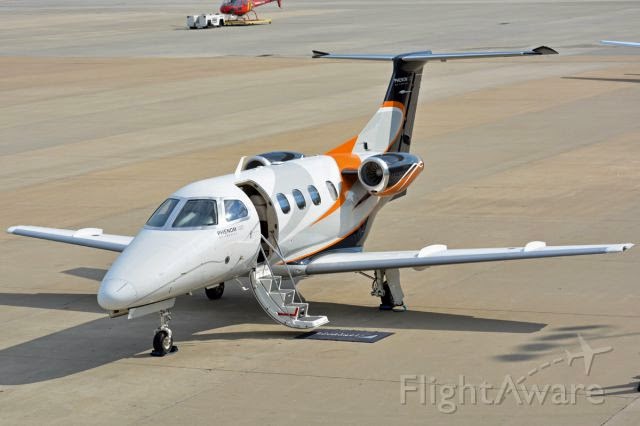
A small jet aircraft crashed into a neighborhood within a mile of Montgomery County Airpark in Gaithersburg, Md., on Monday.

The aircraft is a 2009 Embraer 500 Phenom 100 jet (tail number N100EQ) registered to Sage Aviation LLC in Chapel Hill, N.C., according to Federal Aviation Administration records.

Three people aboard the plane and a mother and her two children in a nearby house were killed in the accident.

The National Transportation Safety Board has recovered the flight recorders from the plane.