Saturday, December 8, 2018

2019 should be a good year for gold, silver, and platinum

The price of rhodium ($2,410 an ounce) is leading the pack in precious metals, followed by gold ($1,247.80 an ounce), palladium ($1,209.00 an ounce), platinum ($792.00 an ounce) and silver ($14.58 an ounce). Which one will make the big break in 2019 to a major upswing?

Platinum vs. Palladium

I believe that the current price of platinum at $805 is a good entry point,” said Bill Stack, in an article posted on the U.S. Gold Bureau's blog Dec. 5. It has since dropped to $792.00 an ounce. Difficulties in the auto sector are largely responsible for platinum’s fall, “and I am not confident those issues will be resolved in 2019,” Stack said. “Platinum could go lower, to $750, with an upside potential of $870. This could come at the expense of palladium, which has temporarily surpassed platinum due largely to financial speculation. I believe 2019 will likely see platinum overtake palladium in price, but both struggle due to difficulties in the auto sector.” Commerzbank in Germany expects the platinum price to increase to $900 by the end of 2019 with palladium ahead at $1,100.

Gold vs. Silver

While a significant floor has been established for gold around $1,200, it is conceivable that we could see a dip to $1,160 or so during a market disruption or sell-off between now and December 2019,” Stack said.

“We are only slightly above the current average mining costs for gold, and below the average mining costs for silver,” Stacks said, based on data through the third quarter of 2018. “While many try to project gold and silver prices based mainly on supply and demand considerations, I believe a more accurate method considers the costs of production as a primary driver. If we use a base of $1,204 for gold and $16.10 for silver, then it would appear to be much more likely that any significant moves will be greater to the upside, than the downside."

With silver currently at a spot price of $14.45 (Dec. 5), it is currently below primary mining costs of $16.10. This analysis alone indicates that silver has significant room to spring to the upside. “Think of that - an 11.4 percent increase in the silver price is needed, just for silver miners to break even,” Stack said.

What about the upside? “I believe gold will close 2019 near $1,351 an ounce, and silver near $17.60,” Stack said. “While there may be spikes to $1,402, and $18.40 respectively, I believe that is where we will close the year.” Commerzbank sees gold at $1,350 and silver at $16.00 at the end of 2019.

Precious Metals Gains & Losses Year-to-Date (Dec. 8, 2018)
  • Rhoduim – up 34%
  • Palladium – up 13%
  • Gold – down 4%
  • Silver – down 16%
  • Platinum – down 17%

Friday, December 7, 2018

HU-16 Albatross flight services contract

The Air Force Test Center at Edwards Air Force Base in California needs a HU-16 Albatross, along with a qualified flight instructor, for the U.S. Air Force Test Pilot School (USAF TPS). The Air Force announced the contract on Friday. The anticipated period of performance for the contract is Feb. 1, 2019 – Jan. 31,2024.

“The objective of this program is to provide test pilot training in a HU-16 Albatross for approximately 50 USAF TPS students and staff members during 2-4 deployments per year," the Air Force said.

The Air Force Test Pilot School is where the Air Force's top pilots, navigators, and engineers learn how to conduct flight tests and generate the data needed to carry out test missions. An HU-16 Albatross is sought to provide the unique experience of flying a historic, multi-engine, water-landing capable aircraft.

Deployments will be conducted at Edwards Air Force Base and typically occur in April and October.

Wednesday, December 5, 2018

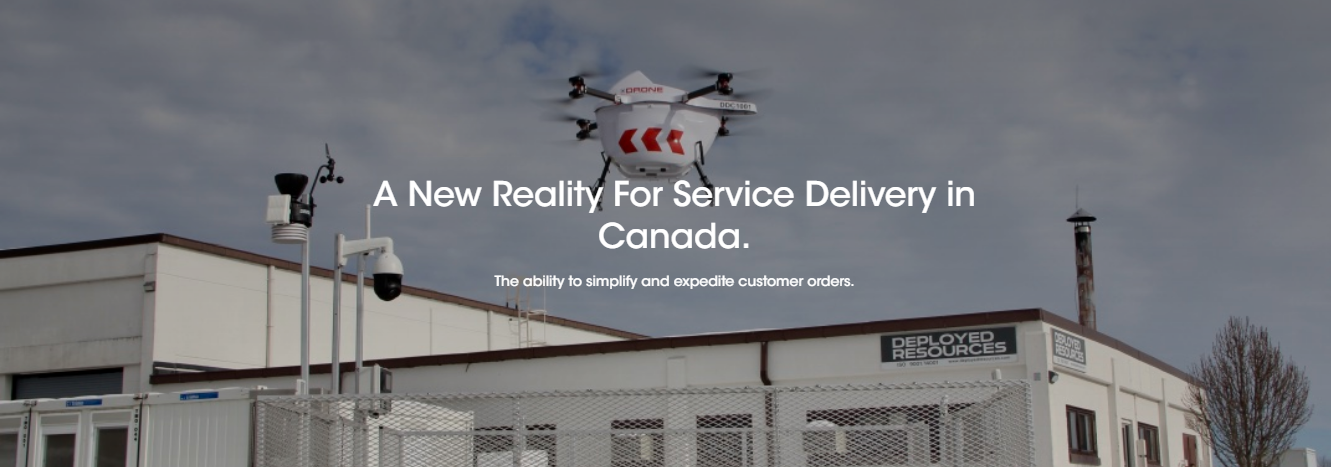
Drone Delivery Canada signs $2.5 million commercial agreement

Drone Delivery Canada (DDC) has executed a commercial agreement with the Moose Cree First Nation to deploy DDC's drone delivery technology platform with the Moose Cree First Nation communities.

The company is currently permitted to commercially operate its drone delivery platform within the Moosonee and Moose Factory communities with its Compliant Special Flight Operations Certificate which permits DDC to conduct drone operations in all Canadian provinces and territories. The drone delivery platform will service two northern towns located in Ontario approximately 19 kilometers south of James Bay. 

Financial terms of the agreement are $2.5 million of revenue for year one with the potential to expand services in following years.

Monday, December 3, 2018

Little Caesars Pizza opens in Singapore and Philippines

Little Caesars Pizza, the third largest pizza chain, will open its first restaurant in the Republic of Singapore in January. The global pizza brand, which is currently operating in 23 countries and territories, is continuing the expansion of its international footprint with new restaurants in Southeast Asia. The franchisee, Palm Tree Foods Pte Ltd., is owned by James Kodrowski. The first restaurant under the new franchise relationship will be located at the Income at Raffles building in Singapore. Additionally, Little Caesars Pizza will open its first location in the Philippines next month.

"Our expansion into this region was motivated by its strong growth in the food and pizza industries, plus a population of middle class customers that will double by 2020," said Paula Vissing, senior vice president of International for Little Caesars Pizza.

Little Caesars Pizza has grown its international presence with franchisees in Latin America, the Middle East, Australia, Canada, the Caribbean, and Mexico.

Headquartered in Detroit, Mich., Little Caesars is the largest carryout-only pizza chain in the United States. The company was founded in 1959 as a single family-owned restaurant.

Wednesday, November 28, 2018

US Army invites concepts and ideas for High Altitude AISR capability

The U.S. Army Contracting Command Redstone Arsenal in Alabama is seeking information on potential concepts and ideas for a High Altitude Airborne Intelligence Surveillance and Reconnaissance (AISR) capability.

According to a Request For Information (RFI) document released Wednesday by the Army, the Special Electronic Mission Aircraft Product Directorate of the FixedWing Project Office has an emerging potential requirement for a High Altitude AISR capability.
  1. Operate above 35,000 feet Above Mean Sea Level.
  2. Operate in an Anti Access/Area Denial environment.
  3. Endurance of 8 hours or greater.
  4. Communication Intelligence and Electronic Intelligence payloads.
  5. Global Air Traffic Management Compliant.
  6. Aircraft Survivability Equipment.
  7. Aviation Mission Equipment/Assured Positioning Navigation and Timing.
  8. Tactical Communications (Line of Sight, Beyond Line of Sight, Voice and Data).
  9. Novel and advanced threat detection and avoidance techniques/systems.
This Request For Information does not commit the government to contract for any supply or service whatsoever,” the Army said. “All firms responding to this RFI are advised that their response to this notice is not a request that will be considered for contract award. Further, the Army is not at this time seeking proposals and will not accept unsolicited proposals. The information from this market research is for planning purposes only. This is strictly market research.”

Companies interested in responding to the RFI must submit a response by Jan. 11. It is the intent of Program Managers of the Fixed Wing and Sensors Aerial Intelligence Project Offices to conduct individual conference calls as necessary.

Saturday, November 24, 2018

Oil leak likely cause of 2017 plane accident in Manitoba, Canada

The Transportation Safety Board of Canada (TSB) released its investigation report Thursday into the November 2017 loss of control on landing involving an aircraft at Thompson Airport in Manitoba, Canada.
On Nov. 2, 2017, a Perimeter Aviation Fairchild Metro III (serial number AC-756B, registration C-FLRY) was operating on a ferry flight from Gods River Airport, Manitoba, to Thompson Airport, Manitoba, to reposition the aircraft for inspection and repair. As the aircraft neared the airport, the crew advised air traffic control that they had received a low oil pressure indication on the left engine. After consultation with maintenance, the crew considered the risks associated with landing single engine and without hydraulic pressure for the nose-wheel steering, and decided to continue the flight with both engines running. After touchdown, the aircraft suddenly veered to the right and exited the runway. The aircraft was substantially damaged. The two crew members received minor injuries.
The investigation found that the low oil pressure indication was likely the result of a steady oil leak past an air-oil seal in the left engine. The loss of oil pressure thus resulted in a loss of propeller control authority on landing and a runway excursion. The investigation also found that the decision to continue the flight with both engines running was not consistent with the quick reference handbook procedures for low oil pressure indications.
The aircraft was equipped with a cockpit voice recorder but was not equipped with a flight data recorder, nor was one required by regulation. The aircraft's integrated flight management system was capable of capturing engine parameters, but it was not configured to do so. If flight data, voice, and video recordings are not available to an investigation, the identification and communication of safety deficiencies to advance transportation safety may be precluded.
Following the occurrence, the TSB issued an Aviation Safety Advisory letter suggesting that Transport Canada review the Fairchild Metro III aircraft flight manual's emergency procedures for low engine oil pressure indications. In addition, Perimeter Aviation installed memory cards that store engine parameter data on its aircraft that are equipped with an integrated flight management system. It has also implemented crew resource management training for all of its air-taxi and commuter flight crews.

Tuesday, November 20, 2018

The potential for Electrified Aircraft Propulsion

NASA will lead a meeting next month that will perform a market assessment of U.S. industry leaders regarding the potential for electrified aircraft to include electric drive train, power distribution, and energy storage concepts to be used, in whole or in part, as primary propulsion for fixed-wing passenger-carrying transport aircraft.

The Industry Day meeting, scheduled for Dec. 6, will be held at the Logistics Management Institute in Tysons, Va. The event is being organized by the Associate Director for Flight Strategy, Integrated Aviation System Program at NASA Langley Research Center in Hampton, Va. There will be up to eight one-hour briefing slots allocated to the industrial base during the meeting.